
Ep 200 – The Power of Pleasure: Why Feeling Good Matters in Your Marriage
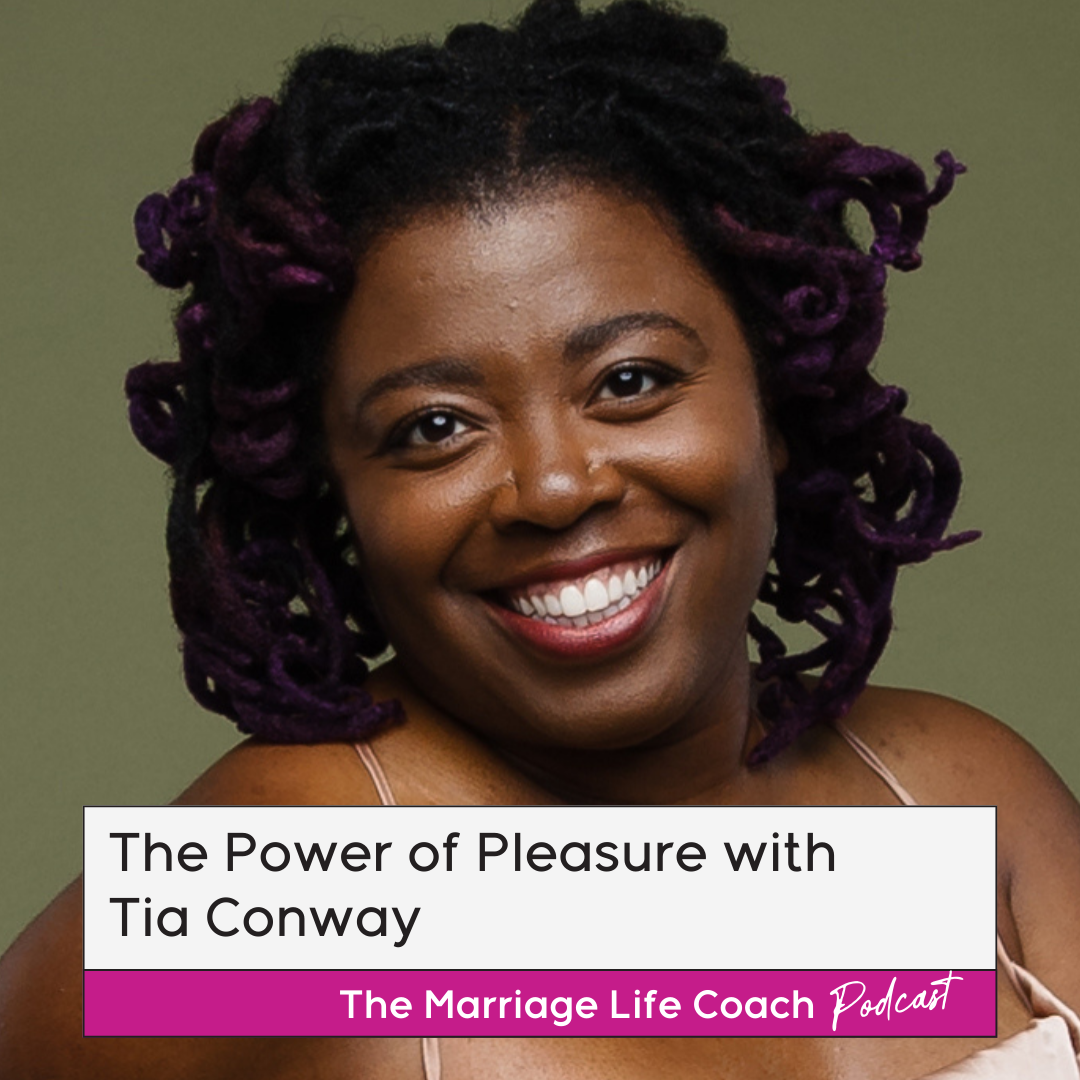
In Episode 200 of The Marriage Life Coach Podcast, I sat down with Tia Conway, a licensed therapist and sex educator, to explore the power of pleasure in marriage. And we talked in depth about why pleasure isn’t optional. It’s essential.
The Problem: We’ve Been Taught to Postpone Pleasure
I grew up with a Catholic grandmother. The system I learned as a child was fueled by guilt and sacrifice. Pleasure was something that happened later after you’d earned it, after you’d suffered enough, after you’d proven you weren’t selfish.
Maybe you didn’t grow up Catholic, but you probably learned some version of this. Work first, play later. Sacrifice now, enjoy later. Be responsible, be productive, be useful. Then, maybe, if there’s time, you can think about what feels good.
Tia calls this the cultural programming that makes us resistant to pleasure. And for high-achieving women, the push to postpone pleasure is even stronger. We’re rewarded for pushing through, for being tough, for not needing things. Let alone ENJOYING things.
But here’s what Tia said that stopped me in my tracks: “You need to feel good in order to operate effectively.”
Pleasure isn’t a reward for productivity. It’s the fuel.
Redefining Pleasure: Aesthetic vs. Embodied
One of the most powerful parts of my conversation with Tia was when we talked about how to define pleasure. Because when you hear “pleasure,” you might immediately think of bubble baths or spa days or perfectly curated Instagram moments.
Tia draws a distinction between two types of pleasure:
Aesthetic Pleasure: This is about how things look. The beautiful tablescape, the perfectly organized space, the Instagram-worthy moment. There’s nothing wrong with aesthetic pleasure, but it’s often performative. We’re creating pleasure for the eyes of others.
Embodied Pleasure: This is about how things feel in your body. It’s the sensation of warm water when you wash your hands. It’s the taste of really good food. It’s the feeling of dancing in your kitchen.
I shared a story in the episode about grocery shopping with my husband early in our marriage. Michael Bublé came on over the speakers, and we just started dancing. Right there in the spaghetti aisle.
That’s embodied pleasure. It’s not performative. It’s not about how it looks. It’s about how it feels.
How Pleasure Transforms Your Marriage
When you increase pleasure in your own life, your marriage changes.
Tia explained that when we’re not getting our pleasure needs met, we often become more irritable, more critical, more prone to conflict. We’re running on empty. Every small frustration feels bigger because we have no buffer of good feelings to soften the edges.
But when we prioritize feeling good, not in a selfish way but in a sustainable way, we show up differently. We have more capacity. We’re less reactive. We can handle the normal challenges of marriage without treating every frustration like a crisis.
This connects directly to my 3 Relationship Powers framework. Pleasure is foundational to the third power: moving from dread to delight. When you know how to create pleasure in your daily life, you’re not waiting for your husband to make you happy. You’re not dependent on perfect circumstances. You’re bringing the joy with you wherever you go.
Why High-Achievers Resist Pleasure
During our conversation, Tia and I explored why high-achieving women, in particular, struggle with pleasure. Here’s what we identified:
We confuse pleasure with hedonism. We think that if we satisfy ourselves, honor what we want, or prioritize feeling good, we’re being indulgent or selfish. Tia talks about how we fear being seen as “a demon, an evil person, a lackluster, lazy body.” But pleasure isn’t about excess. It’s about nourishment.
We believe we have to earn it. We’ve internalized the message that pleasure is a reward for hard work. So we keep pushing, waiting for the moment when we’ve done enough to deserve feeling good. That moment never comes.
We’re afraid of being seen as lazy. If we’re not constantly productive, we worry people will think we’re not serious, not committed, not valuable. But operating from depletion isn’t strength. It’s unsustainable.
We don’t know how. Many of us have spent so many years disconnecting from our bodies and our desires that we’ve forgotten what pleasure even feels like.
So how do you stop resisting pleasure?
Tia’s answer: Start with permission. Give yourself permission to feel good without earning it. Give yourself permission to want things without justifying them.
Three Ways to Increase Pleasure in Your Marriage
Based on my conversation with Tia, here are three practical ways to bring more pleasure into your marriage.
1. Identify Your Non-Negotiable Pleasures
Tia talks about “non-negotiable pleasures,” the things that genuinely make you feel good and that you commit to doing regularly, regardless of how busy you are.
For Tia and her husband, it’s food. They love to cook together, eat together, garden so they can use fresh ingredients. She says, “My husband and I will be out somewhere and I’m the person that’ll order the messiest meal if I want to eat it. And he will lovingly look at me across the table and be like, man, I love eating with you.”
For my husband and me, it’s road trips. We live in Florida, where you can drive for eight hours and still be in Florida. So we’ve embraced it. We pack snacks, ask each other questions from my Questions for Couples Journal, stop for lottery tickets, and dream about what we’d do if we won.
What’s your version? What activity genuinely brings you joy? Make it non-negotiable.
2. Bring Pleasure to Mundane Moments
You don’t need a vacation or a special occasion to feel good. You can create what I call “non-date dates,” moments where you bring pleasure into ordinary activities.
My husband and I talk about being intentional with even mundane tasks. When we’re in a car for three hours, we prepare snacks, we have a whole road trip process. We stop and buy lottery tickets and ask each other what we’d do if we won. It’s the intentionality that makes it fun.
Being in a car for three hours isn’t inherently fun. It’s just the way we do it.
3. Focus on Embodied Pleasure, Not Aesthetic Pleasure
Stop curating experiences for how they’ll look and start tuning into how they feel.
Instead of thinking “Is this Instagram-worthy?” ask “Does this feel good in my body?”
Instead of creating the perfect date night aesthetic, focus on genuine connection and enjoyment.
Tia shares how she and her husband experience pleasure through food with real enthusiasm. It’s not about the perfect plating or the photo. It’s about really getting into some good food together.
Why This Changes Everything
When you reclaim pleasure, three things happen:
You stop waiting for permission. You realize you don’t need to earn the right to feel good. You can enjoy your life now, not later.
You reduce conflict in your marriage. When you’re nourished and your pleasure needs are met, you’re less reactive, less critical, less irritable. You have more capacity for your partner.
You model permission for others. When you give yourself permission to feel good, you create space for your husband to do the same. You stop being the productivity police and start being partners in pleasure.
Your Turn: Create a Pleasure Practice
Here’s your homework: This week, identify one non-negotiable pleasure and commit to it. It doesn’t have to be big or complicated. It just has to genuinely feel good to you.
Maybe it’s your morning coffee ritual. Maybe it’s a weekly date night. Maybe it’s dancing in your kitchen.
Choose something. Commit to it. Notice what changes when you stop postponing your pleasure.
Listen to the Full Episode
Want to hear the complete conversation? Listen to Episode 200 of The Marriage Life Coach Podcast: The Power of Pleasure with Tia Conway.
Join the Growth Gap Workshop (FREE)
If you’re ready to create more pleasure and connection in your marriage, join my free Growth Gap Workshop. I teach you how to bridge the gap when you and your husband are growing at different speeds. Click here to get access now.
Work With Me Privately
If you’re a high-achieving woman in a marriage that’s stuck but safe, private coaching might be perfect for you. I help Type A women married to Type B men create more clarity, power, and love inside AND outside their marriages. Learn more about private coaching here.
Meet Tia Conway
Tia Conway is a licensed therapist, sex educator, and EMDR practitioner who helps women reconnect with their bodies and redefine pleasure on their own terms. Through her practice, Freedom and Flow Collective, and her podcast, Pleasure and Peace Practice, she offers holistic, trauma-informed support for high-achieving women navigating intimacy, identity, and self-worth.
Follow Tia on Instagram: @pleasureandpeacewithtia
Submit an anonymous question to Tia’s podcast here.
About Maggie Reyes
Maggie Reyes is a Master Certified Life Coach and feminist marriage coach for high-achieving women who want to strengthen marriages that feel stuck but not broken. She is the host of The Marriage Life Coach Podcast, ranked in the top 2% globally, where she teaches high-achieving women the practical relationship skills they were never taught in school.
Through individual marriage coaching for women, Maggie helps clients improve communication, reconnect emotionally, and create real change in their relationships — even if their partner isn’t interested in couples therapy or coaching. She is the author of the bestselling Questions for Couples Journal and creator of the Soul-Centered Communication framework.
Maggie’s work is rooted in feminist values. While she primarily works with women married to men — navigating the patriarchal programming (and deprogramming) that shapes those relationships — she has also supported women in same-sex marriages. The same kinds of communication patterns, emotional disconnection, conflict loops, and repair skills apply regardless of gender. Her work is inclusive of diverse identities and experiences.
Marriage coaching for women who want to feel connected, not just committed
If you love your husband but feel disconnected, stuck in the same arguments, or exhausted from carrying the emotional load of the relationship, you’re not alone — and your side of the table is where your power lives.
Maggie specializes in individual marriage coaching for high-achieving women who want to feel loved, respected, and deeply connected again. Whether you’re looking for communication tools, emotional clarity, or a new way forward in your marriage, you’ll find support here.
✨ Transparency Note
This blog post was inspired by The Marriage Life Coach Podcast Episode 200, prepared by my team and helped by AI. IT REALLY TAKES A VILLAGE PEOPLE ;-).
Thank you for reading, it’s an honor to be part of your day.